Existing Patients
(949) 880-6638
New Patients
(949) 216-3427


If your dentist recommends a root canal, try not to worry — the procedure is a well-established, tooth-saving treatment that relieves pain and preserves your natural smile. Modern root canal therapy is performed with precise instruments and effective anesthesia, making the experience far more comfortable than many patients expect. In most cases it’s a predictable way to treat a damaged or infected tooth while avoiding extraction.
At the office of ProSmiles OC, we combine up-to-date techniques with a gentle approach to help patients maintain healthy, functioning teeth. Patient comfort and clear communication are priorities for our team, so you’ll always know what to expect before, during, and after treatment.
Root canal therapy is focused on preserving the natural tooth whenever possible. When the inner tissues of a tooth become infected or irreversibly damaged, removing those tissues and sealing the canals prevents the infection from spreading and restores the tooth’s stability. Keeping your tooth avoids the complications that can come with extraction, such as neighboring teeth shifting or the need for more complex restorative work.
Outcomes for modern root canal treatments are favorable — long-term success rates are high when the procedure is performed with careful technique and followed by appropriate restoration. In many cases, a properly treated tooth can remain functional for decades with routine dental care and periodic monitoring.
Choosing root canal therapy when it’s indicated supports both oral function and overall dental health. Preserving a natural tooth helps maintain normal chewing forces, supports jawbone health, and contributes to a confident smile that feels and looks like your own tooth.

Each tooth contains an inner chamber called the pulp. This soft tissue houses nerves, blood vessels, and connective tissue that help the tooth develop and sense temperature and pressure. Although a fully mature tooth does not rely on the pulp to survive, the pulp still plays a role in signaling when something is wrong.
When bacteria reach the pulp — often through deep decay, a crack, or an injury — the tissue can become inflamed or infected. That process can produce sharp or lingering pain, increased sensitivity to hot or cold, discomfort with biting, or changes in color. In some cases, an infection forms at the root tip and shows up on X-rays before symptoms become severe.
Not all toothaches mean you need a root canal, but certain signs should prompt a prompt evaluation. Early diagnosis and treatment help contain the problem before it becomes more complex or affects surrounding structures.
Below are several common warning signs that a tooth may need root canal treatment:
Continuous or throbbing pain that lingers even after an analgesic can indicate that the pulp is inflamed or infected. Pain severe enough to disturb sleep is a frequent reason patients seek care and should be assessed promptly.
Discomfort when consuming very hot or very cold foods and drinks — especially when the sensation lingers after the stimulus is removed — may point to deep decay or pulpal irritation.
If chewing causes pain or the tooth reacts to the lightest touch, the nerve supply inside may be compromised. This is a common symptom of pulpal involvement or an abscess forming beneath the root.
Discoloration of a single tooth can occur after trauma or as a consequence of internal tissue breakdown. A discolored tooth may have lost vitality and should be evaluated for internal damage or infection.
A cracked or fractured tooth can expose the pulp or allow bacteria to infiltrate the inner chamber, leading to infection. Even a small fracture can have significant consequences if left untreated.
Swelling of the gums or the presence of a pimple-like bump (sinus tract) near a tooth often signals that an infection has formed and is trying to drain. Timely care helps avoid more extensive spread.
Infections that involve the supporting bone can cause mobility. Treating the source of infection and stabilizing the tooth through appropriate restoration can often restore comfort and function.

Some teeth in need of root canal therapy don’t cause obvious pain, and a problem may first be discovered on a routine radiographic exam. Even in the absence of severe symptoms, radiographs can reveal changes at the root tip or bone loss that indicate chronic infection.
Delaying care can allow an infection to progress, increasing the chance of more extensive bone involvement or spread to adjacent areas. Early intervention can simplify treatment, reduce the number of visits required, and protect your overall oral health.
When a root canal is recommended, it’s wise to discuss the diagnosis, treatment plan, and timing with your dental team so you can make an informed decision that preserves function and avoids preventable complications.
Today’s root canal treatment uses precise instruments, digital imaging, and effective local anesthesia to make the procedure as comfortable and efficient as possible. Your dentist will first numb the area and isolate the tooth with a rubber dam to keep it clean and dry during the procedure.
Next, an access opening is made so the dentist can remove the inflamed or infected pulp, gently clean and shape the internal canals, and irrigate to eliminate bacteria and debris. The canals are then filled with a biocompatible material to seal them and prevent reinfection.
Some root canals are completed in a single visit; others may require two or more appointments if the tooth’s anatomy is complex or an active infection needs time for medication to take effect. For patients who experience anxiety, sedation dentistry options are available to improve comfort during treatment.
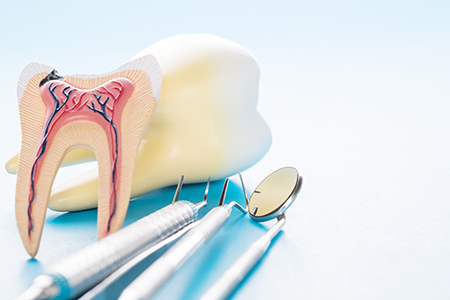
At ProSmiles OC, patient recovery and long-term results are priorities. After root canal therapy, most people experience only mild soreness that gradually improves over a few days. Following a few simple guidelines helps support healing and protects the restored tooth.
Although the source of the original pain will be addressed by the root canal, the treated tooth will usually require a permanent crown or suitable restoration to restore strength and prevent fracture. Until the final restoration is placed, the tooth may be more vulnerable to stress and should be treated with care.
After the procedure, you may notice the following:
Anesthesia can take one to a few hours to wear off. During this time, avoid chewing on the numb side to prevent accidental biting of the lips, cheeks, or tongue.
Mild to moderate soreness is common as surrounding tissues recover. Over-the-counter pain relievers are often sufficient, and your dentist will advise if additional medication is needed.
If antibiotics are prescribed to control or prevent infection, take the full course as directed to ensure the best healing response.
A tooth that has had a root canal may be structurally weaker until it is permanently restored. Avoid hard or sticky foods and try to chew on the opposite side until your final restoration is completed.
Brushing and flossing as usual helps prevent new problems and supports overall oral health while the tooth heals and after it is restored.
Once healing is underway, plan to have the tooth restored with a crown or appropriate restoration to rebuild its strength and function for long-term success.
With careful treatment and routine dental care, a tooth that has received root canal therapy can remain healthy and functional for many years. Our team is committed to delivering thoughtful, evidence-based care and to helping patients understand each step of their treatment.
If you have persistent dental pain, swelling, or questions about root canal therapy and restorative options, please contact us for more information and to schedule an evaluation.
A root canal procedure is the best way to save a tooth that has been damaged by decay or injury and preserve your natural smile. The alternative is an extraction and treatment to replace the tooth. While at times a tooth is non-restorable and an extraction is the only option, when possible, it’s best to try and save your natural tooth. With proper care, a tooth with root canal therapy can serve your smile well for many years to come.
Despite lingering myths from before the age of modern dental anesthesia and technology, having a root canal procedure today is as routine and comfortable as visiting the dentist for a filling. While the procedure is performed under local anesthesia with your tooth completely numbed, we can also discuss options in dental sedation.
Whether the symptoms of a dental infection subside after a course of antibiotics, a draining abscess provides you with some temporary pain relief, or a tooth with radiographic evidence of pathology has not yet developed symptoms, it’s essential, before an infection worsens or occurs, to have a root canal procedure performed. In this way, the tooth can be disinfected, filled, and sealed to protect your health and avoid further problems.
If you have sustained a dental injury, have a toothache, jaw pain, swelling, or are experiencing any other unusual and uncomfortable oral symptoms, contact our office immediately for care. Dental problems that have not been evaluated and treated can significantly worsen, producing more severe damage and consequences for the involved teeth, your oral health, and even your overall wellbeing. Once you get in touch with our office, our friendly and compassionate office team will get you in for care at your earliest convenience.
While some root canal procedures can be completed in one visit, others may involve 2 or 3 appointments. How long it takes depends on various factors, including active infection, the number of canals in the tooth, and the tooth’s location or anatomy.
With a success rate that exceeds 95%, root canal therapy remains the most effective procedure to save a tooth in which the inner vital tissues have been damaged. However, as with all healthcare procedures, there are a small percentage of cases where the teeth become symptomatic a second time. The good news is that many of these teeth can still be saved with root canal retreatment or a minor surgical procedure known as an apicoectomy.
The best ways to maintain a tooth with root canal therapy are to get the proper restoration required to rebuild and protect the tooth, maintain proper oral hygiene, and schedule appointments for routine dental checkups and care.
Saving a tooth with root canal therapy is a wise investment that, in the long run, is typically less costly and invasive than having the tooth extracted and replaced with a fixed bridge or implant. As far as the exact cost of care, it can vary depending on which tooth is being treated. Many dental insurance plans provide coverage for root canal therapy. At the office of ProSmiles OC, we do our best to optimize your dental benefits and minimize your out-of-pocket expenses. Our staff will answer all your questions about the cost of care and discuss all your payment options.
At the office of ProSmiles OC, we use the latest technology and most effective methods of care to provide precise and gentle care. Our reputation for excellence is based upon a consistent record of achieving successful treatment outcomes while providing prompt, stress-free, and convenient treatment for every type of dental need.
A root canal is a dental procedure that removes inflamed or infected pulp from inside a tooth and seals the internal canals to prevent reinfection. The pulp contains nerves and blood vessels and can become compromised by deep decay, fractures, or trauma. Root canal therapy preserves the natural tooth structure and allows the tooth to continue functioning in the mouth.
Modern root canal treatment uses precise instruments, digital imaging, and biocompatible filling materials to achieve predictable outcomes. When performed and restored properly, a treated tooth can remain in service for many years. The primary goal is to relieve pain and protect surrounding tissues while maintaining natural chewing function.
A root canal is recommended when the pulp inside a tooth is irreversibly inflamed or infected, which can occur from untreated decay, a deep crack, repeated dental procedures, or injury. This diagnosis is based on clinical examination, symptoms, and radiographs that show changes at the root tip or surrounding bone. The procedure is intended to remove the source of infection and prevent its spread to adjacent teeth and bone.
Choosing root canal therapy instead of extraction preserves the tooth and avoids the restorative and functional consequences of tooth loss. Preserving the natural tooth helps maintain normal bite forces and supports neighboring teeth and the jawbone. Early treatment typically simplifies care and improves prognosis.
Common signs that a tooth may need root canal therapy include persistent or severe toothache, prolonged sensitivity to hot or cold, pain when biting or applying pressure, and visible darkening of a single tooth. Swelling, a pimple-like bump on the gum, or drainage near a tooth also suggest an underlying infection. In some cases teeth cause little or no pain and problems are discovered on routine X-rays.
Because symptoms vary, it is important to have any concerning changes evaluated promptly by a dentist. Early diagnosis can limit the extent of infection and reduce the need for more complex treatment. Your dental team will combine your history, exam findings, and imaging to determine the best course of action.
Most patients report that modern root canal treatment is no more uncomfortable than receiving a filling because the area is numbed with local anesthesia before work begins. Dentists also use techniques such as isolation with a rubber dam and, when appropriate, sedation options to enhance comfort and reduce anxiety. The goal is to remove painful inflamed tissue so that the procedure alleviates the cause of the pain rather than increasing it.
After the appointment, it is normal to experience mild to moderate soreness for a few days as surrounding tissues heal, and over-the-counter pain relievers typically control this discomfort. If severe pain, extended swelling, or other concerning symptoms occur, follow-up with your dentist is important to address complications or the need for additional treatment. Clear post-op instructions and follow-up care help ensure a smooth recovery.
A typical modern root canal begins with local anesthesia and isolation of the tooth to maintain a clean, dry field. The dentist creates a small access opening, removes the infected or inflamed pulp, cleans and shapes the internal canals with precise instruments, and irrigates the space to remove bacteria and debris. After thorough cleaning, the canals are filled with a biocompatible material to seal them and prevent reinfection.
Some cases are completed in a single visit while others require two or more appointments when anatomy is complex or when an active infection needs time for medication to work. A temporary restoration may be placed until a permanent crown or other definitive restoration is completed to restore strength and function. Good communication about the treatment plan helps patients know what to expect at each step.
Recovery time after a root canal varies, but most patients experience only a few days of mild soreness as the tissues heal. Anesthesia can numb the area for several hours immediately after the appointment, and any discomfort afterward is typically managed with over-the-counter analgesics unless otherwise directed by your dentist. Routine activities can usually be resumed the same day, but chewing on the treated tooth should be avoided until the final restoration is in place.
If antibiotics or prescription medications are provided to control infection, it is important to complete the course as directed. Persistent or worsening pain, swelling, or signs of infection should prompt a follow-up visit. Long-term success depends on completing the restorative phase and maintaining regular dental checkups.
Root canal therapy is a highly successful procedure, but like all treatments it carries some risks, including incomplete removal of infection, reinfection, fracture of a weakened tooth, or rare complications such as instrument separation inside a canal. Some teeth have complex canal anatomy that makes cleaning and sealing more challenging, and retreatment or surgical procedures may be necessary in a small percentage of cases. Awareness of these possibilities helps patients make informed decisions.
Careful diagnosis, skilled technique, appropriate use of imaging, and timely placement of a permanent restoration reduce the likelihood of complications. Maintaining good oral hygiene and attending regular follow-up appointments allow early detection and management of problems. Your dentist will explain specific risks related to your tooth and treatment plan so you understand the expected outcomes.
Alternatives to root canal treatment typically include extraction of the affected tooth followed by replacement options such as a dental implant, bridge, or removable prosthesis. Each alternative has different implications for adjacent teeth, chewing function, jawbone health, and long-term maintenance. In some cases, conservative measures such as pulp capping or monitoring may be appropriate for recently exposed or only partially inflamed pulp, but these approaches depend on the clinical situation.
Choosing the best option requires a thorough evaluation of the tooth, overall oral health, and the patient's goals. A dentist can outline the pros and cons of preserving the natural tooth versus extraction and restorative replacement so you can make an informed choice. Early assessment often expands the range of conservative treatments that may be available.
After a root canal, protect the treated tooth by avoiding hard, sticky, or very chewy foods until a permanent restoration is placed. Maintain good oral hygiene with gentle brushing and regular flossing to prevent new decay around the restoration, and take any prescribed medications as directed to support healing. If you were given a temporary filling, be cautious with that tooth until the final crown or restoration is completed.
Schedule and attend the follow-up appointment to place the definitive restoration, as a crown or appropriate onlay restores strength and prevents fracture. Continue routine dental exams and X-rays as recommended to monitor the treated tooth over time. Report any recurring pain, swelling, or changes promptly so your dentist can assess and manage potential problems.
ProSmiles OC provides root canal therapy using modern diagnostic tools and techniques, with an emphasis on patient comfort and clear communication throughout the process. The office utilizes digital imaging, precise instrumentation, and available sedation options to make treatment efficient and as comfortable as possible. Care plans include coordination of the restorative phase so the treated tooth is rebuilt for long-term function and durability.
Choosing a practice that emphasizes evidence-based care and continuity between endodontic treatment and final restoration helps optimize outcomes and reduce the likelihood of future problems. For patients in Laguna Hills seeking an evaluation, the dental team can explain the diagnosis, treatment options, and follow-up steps tailored to each individual case. An informed discussion with your dentist will help you decide the best pathway to preserve oral health and comfort.