Existing Patients
(949) 880-6638
New Patients
(949) 216-3427


Tooth loss affects more than appearance — it changes how you eat, how you speak, and how your jaw and facial structure hold up over time. Modern dental implants are engineered to restore those essential functions in a way that preserves oral health and supports natural facial contours. Rather than masking the problem with a removable solution, implants replace the missing tooth root as well as the visible crown, giving you a stable base for long-term restorative work.
The implant process blends precise planning, advanced materials, and soft-tissue management to deliver results that are both durable and lifelike. Treatment begins with a comprehensive evaluation that considers bone volume, bite alignment, and overall health so the team can design a plan built around your individual needs. When executed carefully, implant-supported restorations allow individuals to return to regular eating patterns and enjoy confident speech and expression.
At the same time, implants are not a one-size-fits-all solution. Different clinical situations call for different implant designs and restorative approaches, and a thoughtful treatment plan will balance aesthetic goals with functional requirements. The practice focuses on predictable outcomes by combining clinical experience with contemporary imaging and restorative techniques to provide results that feel like a natural part of your mouth.
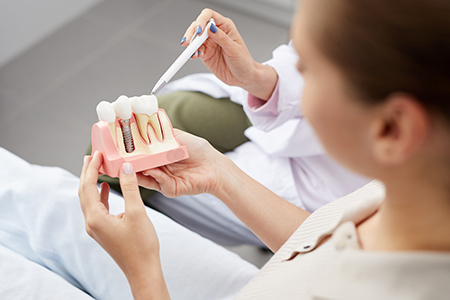
An implant is a biocompatible post designed to integrate with the jawbone, creating a strong, living connection known as osseointegration. This fusion provides the mechanical support necessary for chewing and speaking without the shifting or rocking you may experience with conventional dentures. Because the implant replaces the root, it also transmits natural forces to the underlying bone, which helps preserve bone volume and maintain facial shape over time.
Restorations attached to implants — whether a single crown, a bridge, or a full-arch prosthesis — are crafted to match surrounding teeth in color, contour, and occlusion. Careful attention to how the restoration fits with neighboring teeth and soft tissues is essential to achieving a comfortable, long-lasting result. With good oral hygiene and routine maintenance, implant restorations can remain stable for many years.
Another advantage is the stability implants provide for prosthetic work. Implants eliminate the need to alter healthy adjacent teeth in many cases, preserving more of your natural dentition. This conservative approach often results in better long-term dental health and makes future treatments simpler should they become necessary.
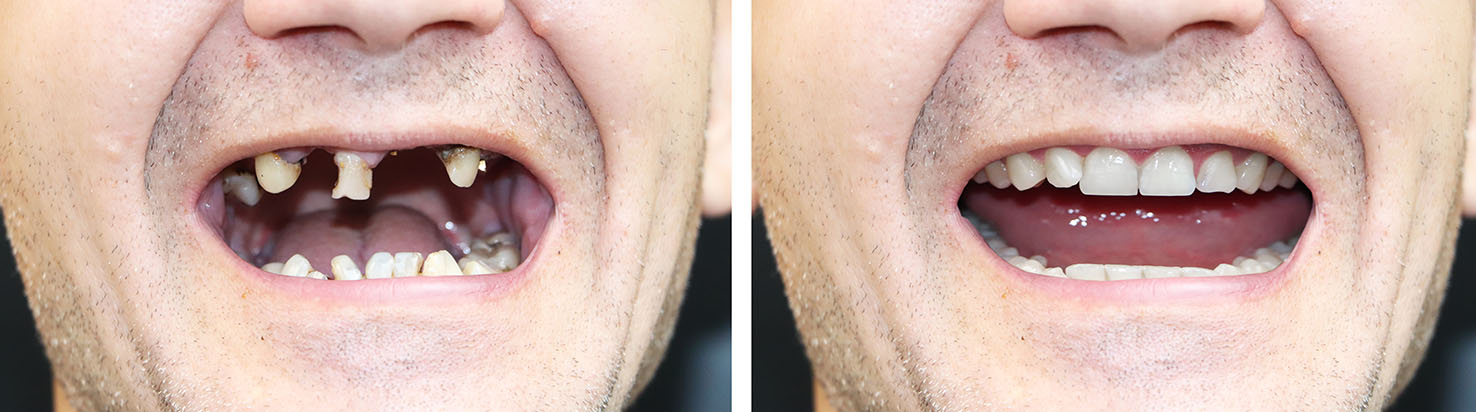
A successful implant outcome begins with detailed imaging and a careful review of your medical and dental history. The consultation evaluates bone quantity, sinus position, bite relationships, and soft-tissue health to determine the best implant type and placement strategy. For complex cases, digital planning tools and 3D imaging help visualize the final prosthesis and guide precise implant positioning.
Surgical placement is usually an outpatient procedure performed under local anesthesia, often with sedation options available for patient comfort. The surgical phase is followed by a healing period that allows the implant to integrate with bone; during this time, temporary restorations can preserve function and aesthetics. Once osseointegration is complete, the final restoration is delivered and adjusted for optimal fit and bite.
Throughout the process, clear communication and step-by-step guidance help patients feel informed and confident. The team provides preoperative and postoperative instructions to support healing, explains options for anesthesia and sedation, and coordinates restorative details to ensure the finished result meets both functional and cosmetic goals.
Successful implant placement depends on having adequate bone volume and quality at the intended site. If bone has diminished due to tooth loss, periodontal disease, or trauma, bone grafting can rebuild the ridge to provide a stable platform for the implant. Grafting materials and techniques vary — from minor ridge augmentations to sinus lifts — and are chosen based on the specific needs of the site and the overall treatment plan.
Bone grafting is a common and predictable adjunctive procedure; it can often be performed at the time of extraction or as a separate preparatory step before implant placement. When grafting is indicated, the goal is to create a long-term, healthy environment that supports implant integration and preserves facial contours for years to come.
Once implants are placed and restored, long-term success is supported by consistent home care and routine professional maintenance. Regular checkups allow the team to monitor implant health, soft tissue condition, and bite stability. With attentive hygiene and periodic evaluations, implants can remain a reliable foundation for chewing, smiling, and speaking for many decades.
If you are exploring solutions for missing teeth, the team at ProSmiles OC can evaluate your smile and explain the implant options that best align with your goals and oral health. Treatment is tailored to the individual, balancing functional outcomes with aesthetic considerations to produce natural-looking, comfortable results. The practice emphasizes thoughtful planning, modern technology, and a patient-centered approach to care.
Replacing missing teeth is about more than filling a space — it’s about restoring the ability to enjoy food, speak clearly, and maintain long-term oral health. When chosen and executed for the right reasons, dental implants are a reliable way to rebuild a complete, healthy smile that integrates seamlessly into daily life.
Contact us for more information.
If you've lost a tooth due to injury, decay, gum disease, or any other reason, we recommend dental implants to replace missing teeth. Dental implants come the closest to replicating the look, feel, and function of your natural teeth.
Dental implants are placed into the jawbone and mirror the same function as the root of a tooth. The procedure for dental implants is usually performed while a patient is sedated. Patients who undergo IV sedation must have an empty stomach and transportation home following the procedure. Most sedation patients will have little to no memory of the procedure occurring.
Generally, dental implants are made out of a biocompatible metal such as titanium. Biocompatible metals are also used for other common bone implants (such as shoulder, hip, and knee replacements). The visible portion of the implant is usually made out of porcelain and is custom-made to match your existing teeth.
Dental implants are designed to fuse to the bone, which makes them become permanent fixtures. Typically speaking, the success rate is nearly 100%. There are few cases in which the implant will not fuse as intended and must be removed. If this happens to occur, the procedure can be attempted again a few months later.
Dental implants are not usually covered by dental insurance, but may be covered under a patient's medical insurance. Our office and your insurance company can discuss coverage options with you based on your individual case and treatment plan.
It's easy... just take care of an implant as if it's a natural tooth! This involves regular brushing, flossing, and dental checkups. If you have any concerns about your implant, contact us immediately.
Dental implants are biocompatible posts that are surgically placed into the jaw to replace missing tooth roots and provide support for restorations. Through a process called osseointegration the implant fuses with surrounding bone to create a stable foundation for crowns, bridges, or full-arch prostheses. This root-level replacement helps restore chewing function and preserves the jawbone by transmitting natural biting forces.
Restorations attached to implants are custom crafted to match the color, shape, and bite of adjacent teeth so they feel and function like natural dentition. Because implants do not rely on neighboring teeth for support they often preserve healthy enamel that would otherwise be altered for a conventional bridge. With proper care implants can provide a long-term, reliable solution for replacing missing teeth.
Good candidates are patients who are in generally good health, maintain reasonable oral hygiene, and have sufficient bone volume at the site where an implant is planned. Certain medical conditions and lifestyle factors such as uncontrolled diabetes, heavy smoking, or active periodontal disease may require management before implant therapy can proceed. A thorough medical and dental evaluation helps determine whether any underlying issues need to be addressed first.
Advanced imaging and clinical examination allow the team to assess bone quality, sinus anatomy, and bite relationships to guide treatment choices. For patients with insufficient bone, adjunctive procedures like grafting or sinus lifts can expand candidacy, and alternative restorative options remain available when implants are not advisable. The treatment plan is personalized to balance safety, function, and aesthetic goals.
The implant journey begins with a comprehensive consultation that includes a review of your medical history, clinical exam, and three-dimensional imaging to plan implant position and prosthetic outcomes. Surgery to place the implant is typically performed under local anesthesia and can include sedation for patient comfort, and some cases may combine extractions and grafting at the same visit. After placement a healing period allows the implant to integrate with bone before the final restoration is attached; this integration phase commonly ranges from a few months to several months depending on the site and any adjunctive procedures.
Temporary restorations are often used during healing to preserve appearance and function while the implant bonds with bone. Throughout the process the team provides clear preoperative and postoperative instructions and schedules follow-up visits to monitor healing and restore the final prosthesis when appropriate. The goal is a predictable, well-fitting restoration that meets both aesthetic and functional expectations while minimizing patient discomfort and downtime.
Implants offer distinct advantages over conventional dentures and some bridges because they replace the tooth root and stimulate the underlying bone, helping to prevent bone loss and maintain facial contours. Unlike removable dentures, implant-supported prostheses deliver superior stability for chewing and speaking and reduce the chance of slipping or clicking. Compared with traditional bridges implants often avoid preparation of adjacent healthy teeth, preserving more of the natural dentition.
That said implants require surgical placement and appropriate bone volume, and treatment planning may be more involved than for removable options. For many patients the improved function, comfort, and long-term oral health benefits outweigh the additional planning and healing time involved. The best choice depends on individual oral anatomy, health considerations, and restorative goals discussed during the consultation.
Implant restorations range from single crowns that replace one tooth to implant-supported bridges and full-arch fixed prostheses that can restore an entire dental arch. Other solutions include implant-retained overdentures that snap onto implants for enhanced retention while remaining removable for hygiene, and hybrid fixed-detachable options for patients who desire a fixed feel with easier maintenance. The specific restoration is selected based on how many teeth are missing, bone availability, and the patient’s functional and aesthetic priorities.
Materials and fabrication methods vary, with high-strength ceramics like zirconia and layered porcelain commonly used to achieve lifelike appearance and durability. The restorative team works closely with dental laboratories and uses digital planning tools to ensure the final restoration fits precisely, balances the bite, and integrates with surrounding soft tissues. Proper prosthetic design is essential to long-term comfort and implant success.
Bone grafting is indicated when the jaw lacks adequate bone volume or quality at the implant site due to long-term tooth loss, periodontal disease, infection, or trauma. Procedures range from minor ridge augmentation to more extensive sinus lifts and block grafts, and they use a variety of materials including the patient’s own bone, donor bone, or synthetic substitutes depending on the clinical needs. The objective is to rebuild a stable foundation that will support predictable implant placement and long-term integration.
Grafting can be performed at the time of extraction, as a staged procedure before implant placement, or concurrently with implant surgery in certain cases. Healing timelines vary with the complexity of the graft but are planned to provide an optimal environment for osseointegration. With careful planning and technique bone grafting has become a routine and reliable adjunct to implant therapy.
Implant surgery is usually performed in an outpatient setting under local anesthesia with optional sedation for added comfort, and most patients experience only mild to moderate postoperative discomfort. Common immediate effects include swelling, bruising, and minor soreness that can be managed with prescribed or over-the-counter medications and standard postoperative care such as cold packs and rest. The practice provides detailed aftercare instructions to support healing and minimize complications.
Follow-up visits are scheduled to monitor integration and soft-tissue healing, and temporary restorations may be used to preserve appearance and function during recovery. Patients are advised to avoid strenuous activity in the first few days, maintain gentle oral hygiene around the surgical site, and report any persistent pain, uncontrolled bleeding, or other concerns promptly. Timely communication and adherence to care guidelines help ensure a smooth recovery and successful outcome.
Long-term implant health depends on consistent home care and professional maintenance similar to natural teeth, including daily brushing with a soft brush, effective interdental cleaning, and routine dental checkups. Interdental brushes, floss designed for implants, and water flossers can be helpful for removing plaque around implant abutments and prosthetic margins where standard floss may be less effective. Regular professional cleanings and periodic radiographic evaluations allow the dental team to monitor bone levels, soft tissue health, and occlusion.
Lifestyle factors such as smoking and uncontrolled systemic conditions can negatively affect implant longevity, so addressing those risks is part of a comprehensive maintenance plan. Patients should also be attentive to changes such as mobility, discomfort, persistent inflammation, or drainage and seek prompt evaluation if symptoms arise. With vigilant oral hygiene and scheduled care implants can function reliably for many years.
While implants enjoy high success rates complications can occur and include infection, failure of osseointegration, nerve injury with altered sensation, sinus complications in the upper jaw, and peri-implantitis, an inflammatory condition affecting tissues around the implant. Many risks are mitigated through careful case selection, thorough imaging and planning, sterile surgical technique, and attentive postoperative care. Early detection and prompt management of problems are critical to preserving implant health.
Patients with certain medical conditions or habits may face higher complication risks, and the team reviews these factors during consultation to tailor treatment and follow-up. Regular maintenance visits and good home hygiene reduce the likelihood of inflammatory complications, and restorative adjustments can address bite or occlusal issues that might otherwise compromise an implant. Open communication with the dental team ensures potential concerns are identified and addressed quickly.
The treatment approach emphasizes prosthetic-driven planning where the desired final tooth position guides implant placement, and this is supported by three-dimensional imaging, digital impressions, and computer-aided design. Guided surgery that uses digital planning and surgical guides can enhance accuracy and predictability, and collaboration between the restorative team and dental laboratory ensures the prosthesis meets aesthetic and functional requirements. Advanced tools help the team visualize anatomy, avoid critical structures, and optimize implant angulation and depth for long-term success.
The team at ProSmiles OC combines clinical experience with contemporary imaging and restorative techniques to create individualized plans that balance safety, comfort, and appearance. Comprehensive communication, sedation options when appropriate, and a coordinated restorative workflow help patients move through consultation, surgery, and restoration with clarity and confidence. Long-term follow-up and maintenance are integral parts of the overall plan to protect results and oral health.